
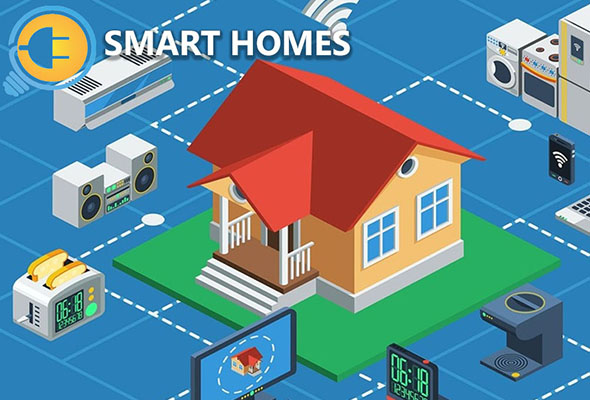
Smart homes are a revolutionary concept that has gained significant popularity in recent years. A smart home refers to a residence equipped with various internet-connected devices and systems that can be remotely controlled and automated to enhance convenience, security, energy efficiency, and overall comfort for the occupants.
One of the key features of a smart home is its ability to be controlled through a central hub or smartphone app. This allows homeowners to remotely manage and monitor different aspects of their home, even when they are away. For example, they can adjust the temperature, turn lights on or off, lock or unlock doors, and even control appliances such as ovens or washing machines.
Energy efficiency is a significant advantage of smart homes. Connected thermostats can learn the occupants’ preferences and adjust the temperature accordingly, reducing energy waste. Smart lighting systems can automatically turn off lights when no one is in the room or adjust brightness levels based on natural light. Appliances can be scheduled to run during off-peak hours, optimizing energy consumption.
Smart homes also offer enhanced security features. Homeowners can remotely monitor security cameras, receive alerts for unusual activity, and even lock or unlock doors remotely. Integration with smart doorbells allows occupants to see and communicate with visitors from anywhere, enhancing safety and convenience.
Furthermore, smart homes provide increased accessibility for individuals with disabilities or limited mobility. Voice-activated assistants, such as Amazon Echo or Google Home, enable hands-free control of various devices, making it easier for people to interact with their environment.
However, as with any technology, there are potential concerns with smart homes. Privacy and data security are critical considerations, as the devices in a smart home collect and transmit sensitive information. It is crucial to choose reputable brands and ensure proper security measures are in place to protect personal data.
Interoperability can be another challenge. With numerous smart home devices and platforms available, compatibility issues may arise when attempting to integrate different systems. Efforts are being made to establish common standards, but it is still a work in progress.
In conclusion, smart homes offer tremendous potential to improve our daily lives by providing convenience, energy efficiency, enhanced security, and accessibility. As the technology continues to evolve and become more widespread, addressing privacy concerns and ensuring interoperability will be crucial for the continued success and adoption of smart homes.